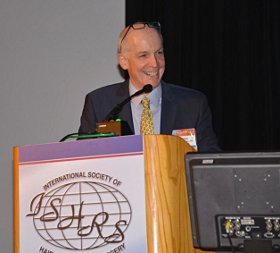
 The 21st Annual Scientific Meeting of the International Society of Hair Restoration Surgery was held in San Francisco from October 13 through 26, 2013. The meeting covers the most important scientific and clinical advances in the field of surgical hair restoration.
As a member of the panel on “Difficult Cases,” that explored challenging and atypical medical conditions and their treatment, Dr. Bernstein presented the “Management of Frontal Fibrosing Alopecia.” This condition is a form of primary scarring hair loss. Dr. Bernstein chose to discuss this disease because it can be mistaken for common baldness; however, since the transplanted hair will be destroyed by the disease process, it is a contra-indication for hair transplantation. Since missing this diagnosis can lead to unnecessary and ineffectual surgery, an awareness of its signs and symptoms are important for every physician managing patients with hair loss.
On the panel on “Post Finasteride Syndrome,” Dr. Bernstein was part of a group that reviewed the latest studies on the efficacy and safety of finasteride in the treatment of androgenetic alopecia. They discussed possible adverse events including claims of persistent sexual dysfunction (Post Finasteride Syndrome) and concerns relating to prostate cancer. They also discussed the challenges that arise in caring for patients when scientific research and the mass media give conflicting information.
In the Symposium “Question the Expert,” Dr. Bernstein presented a case of Diffuse Un-patterned alopeica (DUPA). This condition was first detailed by Dr. Bernstein in his landmark paper “Follicular Transplantation: Patient Evaluation and Surgical Planning,” that was published in Dermatologic Surgery in 1997. DUPA is a form of androgenetic alopecia that presents as rapid generalized hair loss in young adults. Besides being a significant psychological burden for young men and women, its identification is extremely important since medical intervention can have a significant positive impact when instituted early. On the other hand, a misdiagnosis that leads to surgery can result in a failed hair transplant and donor scarring that may become visible over time.
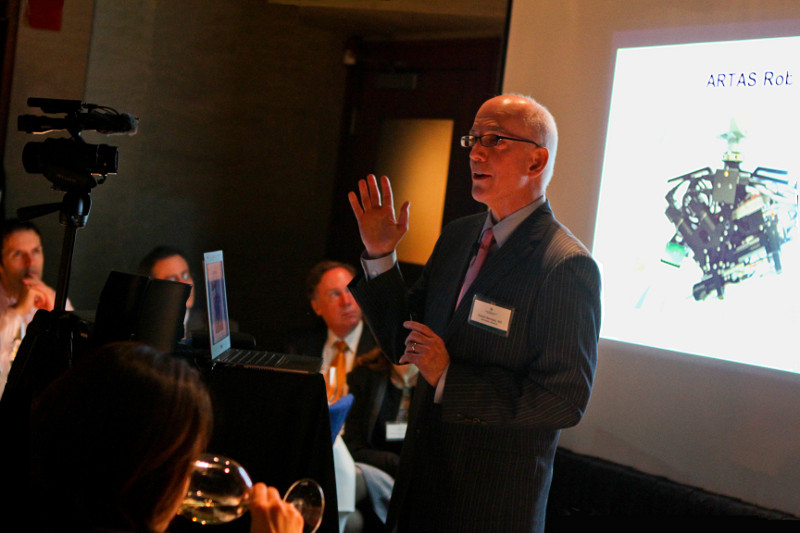
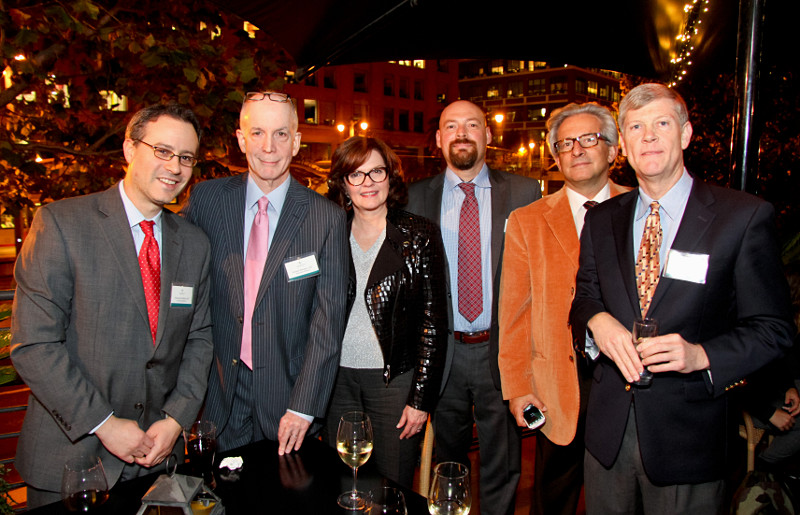
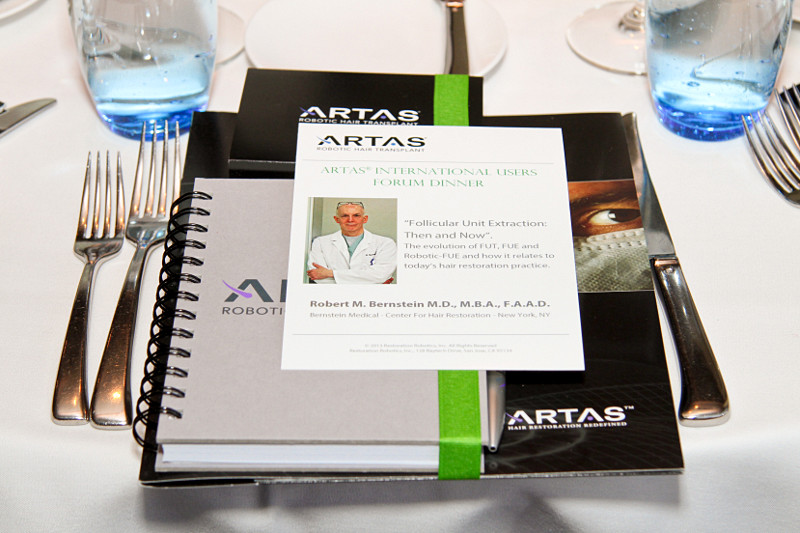
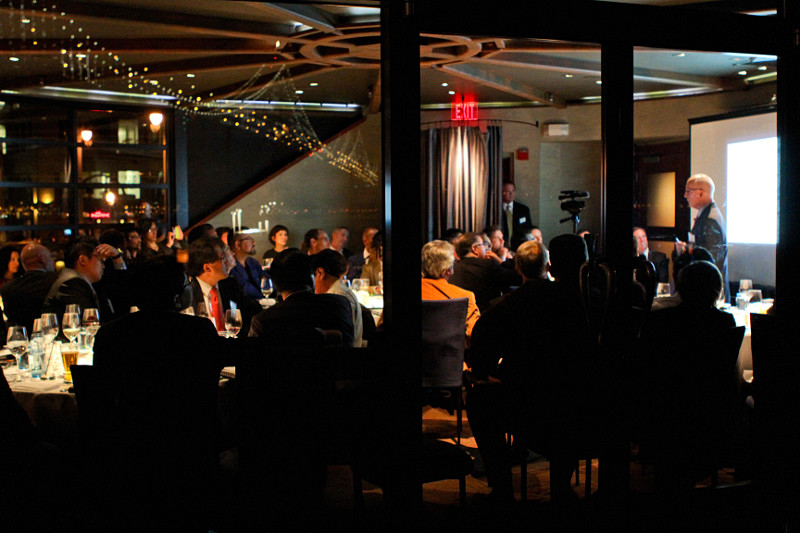
Dr. Bernstein was also the Keynote Speaker for the ARTAS International Users Forum. His presentation, titled “Follicular Unit Extraction: Then and Now,” discussed the evolution of FUT, FUE and Robotic-FUE and how it relates to today’s hair restoration practice. Of particular significance was the natural progression of FUE instrumentation from hand-held manual tools to robotic assisted hair transplantation. Dr. Bernstein explained that in the future, robotic capabilities will not be limited to graft extraction, but eventually will perform each aspect of the transplant including recipient site creation, and graft placement. See “Dr. Bernstein Gives Keynote Presentation On Robotic Hair Transplantation” for more details on the presentation and some photographs of the event.
Posted by