Robotic FUE News

Dr. Bernstein and Dr. Shaver attended the 26th World Congress of the International Society of Hair Restoration Surgeons (ISHRS). At the congress, Dr. Bernstein introduced the newest robotic technology in the field of hair transplantation, the ARTAS iX, to an audience of over 550 hair restoration physicians.
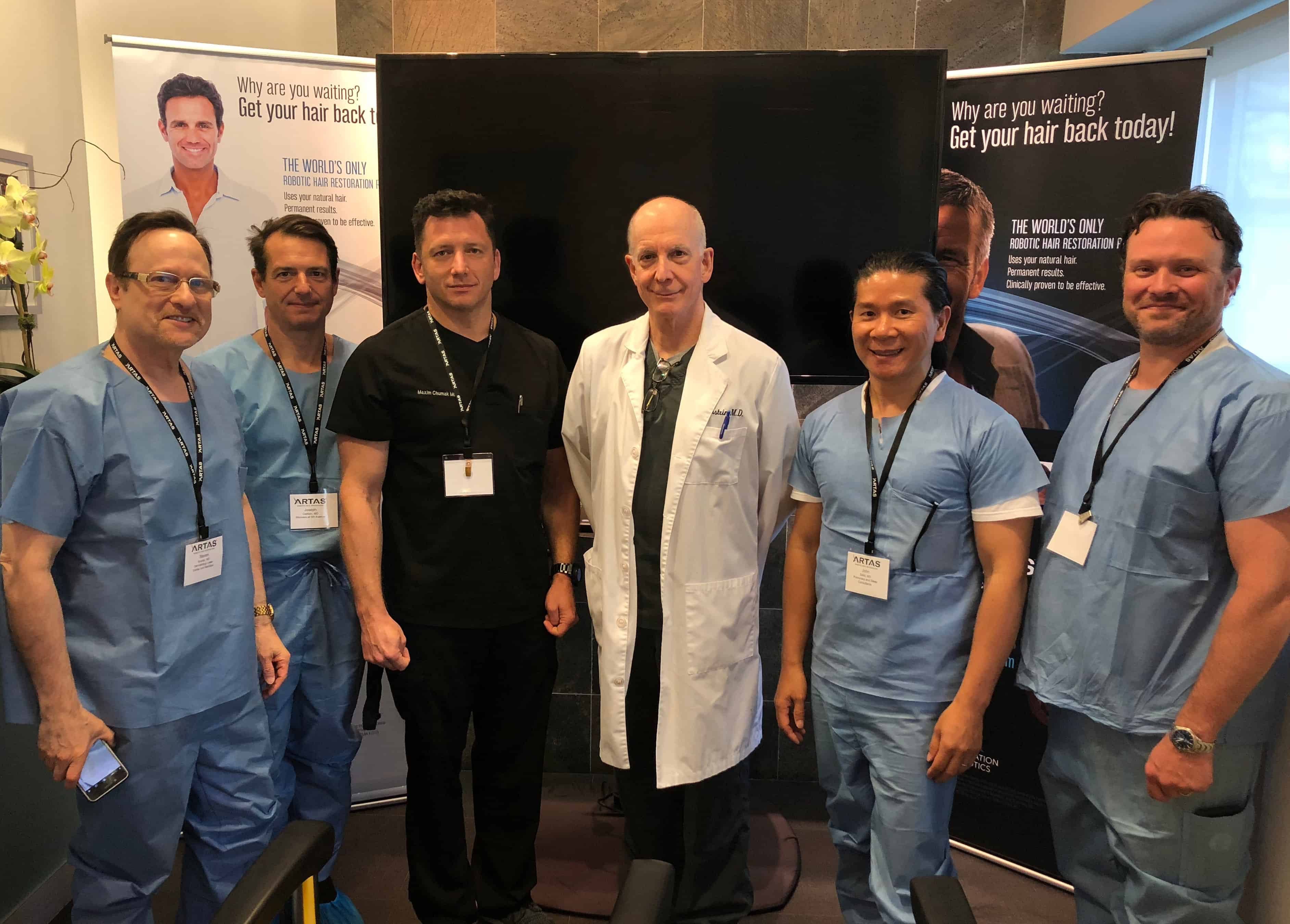 First Master Class in Robotic Hair Restoration
May 11th, 2018 – Robert M. Bernstein MD, a pioneer in modern hair transplantation, led five robotic hair restoration physicians in an intensive master class focusing on ARTAS robotic techniques, surgical planning and aesthetics. The day included a live ARTAS Robotic FUE procedure, a series of twelve presentations and a Q & A period. The ARTAS Hair Transplant System, developed by Restoration Robotics, is the only robotic system in the world designed to aid surgeons in hair restoration procedures.
 On March 9th, 2018 at the 2018 ARTAS Users Meeting in Las Vegas, Nevada Dr. Robert M. Bernstein, a Clinical Professor of Dermatology at Columbia University and founder of Bernstein Medical – Center for Hair Restoration, presented the latest in Robotic Hair Transplantation using the ARTAS® Robot. Dr. Bernstein described the benefits of the new technology, such as decreased time and increased accuracy of the robotic procedure. Dr. Bernstein Presenting Long-Hair Robotic FUE and software and hardware updates of that ARTAS 9x; such as white LED lights that are easier on the users’ eyes, a base extender, smaller size needle options, a more ergonomic headrest, automated scar detection, faster harvesting, and streamlined ARTAS Hair Studio software.
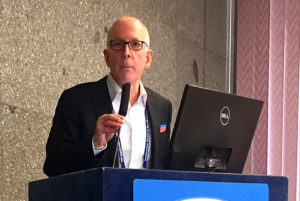 On Friday, October 6, 2017, Dr. Bernstein presented the advances of the most recent upgrade of the ARTAS Robotic Hair Transplant System, the ARTAS 9x at the 25th Annual Conference of the International Society of Hair Restoration (ISHRS).
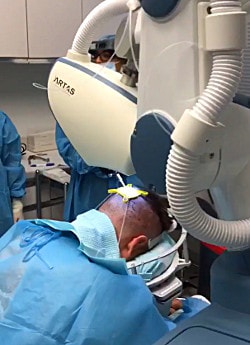 In April 2017, Bernstein Medical became the first hair restoration practice to perform robotic hair transplant surgery using the new ARTAS Robotic System 9x. ARTAS 9x is a major upgrade of the hair transplant robot, enabling faster and more precise Robotic FUE procedures. Some of the hardware improvements to the system include a white light LED, color camera and tensioner, 20-gauge harvesting needle, robotic base extender, new needle mechanism cover, and more comfortable headrest and halo. Software upgrades include better scar detection, faster harvesting, ability to zoom in to the main viewing screen, and improved ARTAS Hair Studio software.
 Dr. Bernstein closed the 2017 ARTAS Users Meeting with a discussion of five advanced techniques in robotic hair transplant procedures that he developed at Bernstein Medical. His presentation covered the benefits of pre-making recipient sites, long-hair FUE, tensioner placement, feathering edges in harvesting, and robotic graft selection. The “Hair Restoration Pearls” presentation included case studies, photographs, and videos demonstrating the techniques to the audience of hair restoration physicians. The two-day affair; which was held in Coronado, California; was a huge success, with over 260 attendees from around the world representing 204 robotic hair restoration practices.
 Onalytica, a company that provides Influencer Relationship Management software and services, has named Dr. Bernstein one of the top influencers (#39 out of 100) on the topic of robotics due to his pioneering work in robotic hair transplant surgery with the ARTAS Robotic System.

 Dr. Bernstein presented results of his study, “Robotic Follicular Unit Graft Selection,” at the 2016 ISHRS World Congress held in Las Vegas, Nevada. Graft selection is a key advance in the ARTAS Robotic Hair Transplant System, a hardware and software suite that automates aspects of the Follicular Unit Extraction (FUE) hair transplant procedure. The enhancement makes Robotic FUE more efficient and improves patient outcomes.
 Dr. Andrew Ordon — Emmy-nominated co-host of the award-winning talk show “The Doctors” — and Dr. Robert Bernstein met at Bernstein Medical – Center for Hair Restoration in New York City on March 3, 2016 to discuss the latest advances in robotic hair transplantation.

 Dr. Robert M. Bernstein, a pioneer of robot-assisted hair transplantation, presented results of a study on a major new advance in robotic follicular unit harvesting, a key step in the surgical procedure, at the 2016 ARTAS User Group Meeting in Dana Point, CA. He reported that the new robotic technique resulted in a clinical benefit of up to 15% more hairs per harvest attempt and 11.4% more hairs per graft than with the current iteration of the ARTAS® Robotic Hair Transplant System. The improvement in graft harvesting should result in better aesthetic outcomes for patients, and this will have wide implications around the world as robotic hair transplant procedures are booming in popularity. Dr. Bernstein presented the findings to a “who’s who” group in the new field of robotic hair restoration surgery at their annual meeting held on February 20th, 2016.

Dr. Bernstein appeared as a guest on The Bald Truth, where he was interviewed by Spencer Kobren, the show’s host, about the ARTAS® Robotic System for FUE hair transplant surgery and the latest updates to the robotic system. He also discussed increasing demand for both FUE procedures and hair transplants, in general, around the world.
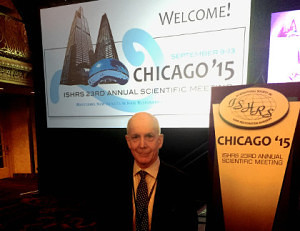
Small, simple modifications in the sequence of the major steps in a Follicular Unit Extraction (FUE) hair transplant procedure will be beneficial to healing and growth following the procedure, says renowned hair restoration surgeon Dr. Robert M. Bernstein. Presenting at the 23rd Annual Scientific Meeting of the International Society of Hair Restoration Surgery (ISHRS) in Chicago, Illinois, Dr. Bernstein detailed how making recipient site incisions before harvesting follicular unit grafts can improve the outcome of an FUE procedure.
For years, it was standard operating procedure in an FUE hair transplant to first harvest follicular units, then create recipient sites in the balding areas and place the extracted units into these sites. This practice persisted despite the fact that hair restoration physicians had known for years that prolonged periods of time outside the body decreased survival of follicular unit grafts. With the widespread adoption of FUE, and the long time needed for the extraction phase of the procedure, Dr. Bernstein looked for ways to streamline the process.

Dr. Bernstein was quoted in a New York Post article on the growing popularity of surgical hair restoration. In the article, Dr. Bernstein explained how celebrity hair transplants have become a driving factor behind the fading of the decades-long stigma of hair transplants.
A 2014 study in the journal Dermatologic Surgery measured follicular unit transection (follicle damage) during the extraction step of a robotic follicular unit extraction (R-FUE) procedure. The study found that robotic transection rates, using the ARTAS Robotic System, compared favorably with non-robotic (manual) FUE transection rates.
Dr. Robert M. Bernstein introduced a new capability of the ARTAS® robotic system, “Follicular Unit Graft Selection,” at the ARTAS User Group Meeting on February 6-7, 2015 in Newport Coast, CA. He presented the new technology and the preliminary results of a bilateral pilot study of the technique conducted at Bernstein Medical.

Dr. Robert M. Bernstein presented the ARTAS Hair Studio™ digital hair transplant design software and robotic recipient site creation using the ARTAS® Robotic Hair Transplant system, each advances in key aspects of hair transplantation, at the International Society of Hair Restoration Surgeons (ISHRS) annual meeting in Kuala Lumpur, Malaysia on Saturday, October 11th, 2014.
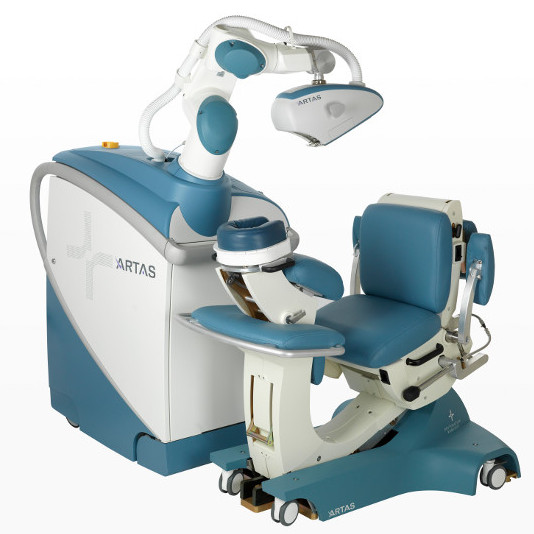
 Restoration Robotics, Inc. has announced that the ARTAS® Robotic System has harvested its 10 Millionth Hair, a major accomplishment for the three-year-old robot. The company attributes the success of achieving the 10 Millionth Hair in this short time span to rapid adoption by hair transplant industry leaders, like hair restoration pioneer Dr. Robert Bernstein. The ARTAS robot is the only image-guided, physician-assisted robotic system for harvesting follicular units.

 Dr. Bernstein discusses the breakthrough technology of the ARTAS® Robotic Hair Transplant system — and how the robot has improved since its initial launch — in an article in Health News Digest.
Not only is the mainstreaming of the hair transplant robot changing perceptions of surgical hair restoration in the public eye, says author of the article Wendy Lewis, but the robot is increasingly in demand at the leading hair restoration facilities across the country.

Dr. Robert Bernstein discusses the benefits of the ARTAS Robotic Hair Transplant system in The Aesthetic Guide, a leading periodical in the field of aesthetic surgery. The article examines how robotic Follicular Unit Extraction (FUE) procedures are an improvement over FUE using handheld devices.

 Dr. Bernstein was interviewed by Spencer Kobren on The Bald Truth, the critically acclaimed broadcast on hair loss and hair restoration. They discussed the latest in robotic hair transplant surgery, the ARTAS Robotic System, FUE and FUT hair transplant procedures, and the future of hair restoration.
 Dr. Bernstein introduced new technology that allows the ARTAS Robotic System to accomplish a critical step in hair transplant surgery, the creation of recipient sites. Presenting at the 2nd ARTAS User Group Meeting on February 7th and 8th, 2014, Dr. Bernstein previewed the recipient site creation technology that brings the robotic system one step closer to performing critical aspects of the labor-intensive, hair transplant procedure.

 Dr. Bernstein is featured in Columbia Business, the alumni magazine of the Columbia Business School, for having “revolutionized the field of hair restoration.” The article mentions his pioneering the FUT procedure — now recognized as the “gold standard” in surgical hair restoration — and robotic hair transplant surgery.

 Dr. Bernstein was honored to deliver the keynote address at the ARTAS International Users Forum in San Francisco. “Follicular Unit Extraction: Then and Now,” reviewed the evolution of surgical hair restoration from FUT through FUE to the cutting edge technique of Robotic-FUE.
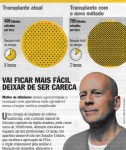
 Dr. Bernstein was quoted in an article on robotic follicular unit extraction (FUE) that appeared in Brazil’s Veja Magazine. It is titled, “Vai Ficar Mais Fácil Deixar de Ser Careca,” which translates to, “It Will Be Easier To Stop Being Bald.”
 Dr. Bernstein and Bernstein Medical – Center for Hair Restoration were featured in New You magazine’s article “My Hair Lady.” The main topic of the article is hair transplantation in women, however it also touches on hair loss in women, Follicular Unit Transplantation (FUT), medication and other products.

 Dr. Bernstein heads discussion on Robotic FUE at the 20th annual meeting of the International Society of Hair Restoration Surgery (ISHRS) which took place October 17-20, 2012. He led a roundtable discussion in the ‘Coffee with the Experts’ session on robotic follicular unit extraction. He was also a panelist at the Finasteride Symposium and gave a presentation on protocol in prescribing Finasteride to hair restoration patients.

 New York, NY (PRWEB) — Robert M. Bernstein, M.D., F.A.A.D., A.B.H.R.S., a world-renowned hair transplant surgeon, presented a series of improvements to hair transplant procedures which use the ARTAS Robotic System for Follicular Unit Extraction (FUE). These updates include revisions to the FUE surgical protocol and technical adjustments to the robotic extraction system. He presented his refinements at the first user meeting held by the developers of the system; Restoration Robotics, Inc.; on September 14 – 16 in Denver, Colorado.

 New York, NY — Robert M. Bernstein, M.D., F.A.A.D., the world-renowned hair transplant physician, pioneer of the Follicular Unit Transplantation (FUT) and Follicular Unit Extraction (FUE) and founder of Bernstein Medical – Center for Hair Restoration, was included in New York Magazine’s ‘Best Doctors‘ issue for the thirteenth consecutive year.
“It is such an honor to be recognized by New York Magazine. Our passion for providing the best hair loss treatments has served as the impetus for pushing the envelope in utilizing new state-of-the-art hair restoration techniques such as Robotic assisted hair transplants.”
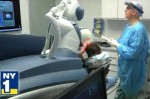
 Dr. Bernstein not only pioneers hair transplant procedures, but hair restoration technology as well. The NY1 television station, based in New York City, visited Bernstein Medical to see a demonstration and talk about the newest tool in the hair restoration toolkit, the ARTAS Robot for Hair Restoration.
The NY1 piece shows the robotic FUE system in action at Bernstein Medical, with views of the robotic arm, the image-guided system, the punch tool, and the user interface.
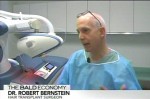
 Dr. Bernstein spoke with Bloomberg’s Matt Miller about the future of hair transplantation in a segment called, “The Bald Economy: Surgical Solutions to Hair Loss.” Here is an excerpt from the segment:
Bloomberg’s Matt Miller: Riding the wave into the future happens to be one of the pioneers of FUE, Dr. Robert Bernstein.
Dr. Bernstein: “The robot now allows a mechanized system to do [follicular unit extraction] very, very quickly and very consistently, so that the human error in this part of the procedure is now gone.”
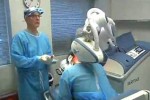 NY1, a New York City television channel, has featured Dr. Bernstein in a segment on robotic hair transplantation.
In the piece, Dr. Bernstein describes why having a computer-driven, image-guided robot is so helpful for hair transplantation. He also discusses the quality of follicular units extracted using the robot.

The February 2012 issue features a section on the “elite league of experts” who celebs are increasingly turning to in order to maintain their high profile image. The article describes Dr. Bernstein as a “pioneer in the world of hair replacement surgery,” and as the hair transplant surgeon of choice for “VIP clients from the world of fashion and entertainment.”

 The New York Times, once again, has recognized Dr. Bernstein’s pioneering hair restoration techniques. The NYT Fashion and Style section noted that he is, “the first hair transplant surgeon on the east coast,” to use the ARTAS robotic system for Follicular Unit Extraction.
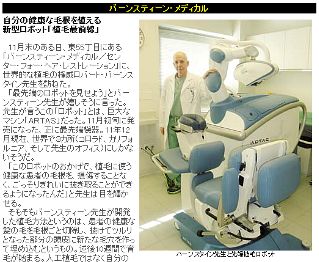
 Dr. Bernstein’s pioneering work in developing FUT and FUE hair transplant procedures has influenced hair restoration physicians across the globe. Recently, his use of the ARTAS System for robotic FUE has grabbed international attention, as he was featured in a Japanese magazine.
You don’t have to be interested in a hair transplant to appreciate the advanced technology in the ARTAS system for robotic FUE.
That is why the technology and media website “All Things D” has featured the image-guided robot in an article titled, “All I Want for Christmas is a Robot Hair Transplant.”
We are pleased to announce that robotic FUE is now available at Bernstein Medical – Center for Hair Restoration. This is a major advance in FUE technology.
The ARTAS system for hair restoration allows us to more effectively isolate follicular unit grafts from the donor area of the scalp without causing damage to individual follicles, a problem that has been a limitation of manual FUE techniques. Many other important parts of the FUE procedure will still be performed by the physician and team.
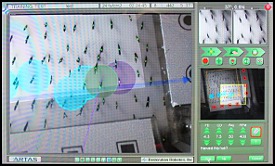
 Dr. Bernstein is quoted extensively in an article on robotic hair transplantation in the online magazine American Health & Beauty.
In “ARTAS: A Faster and More Accurate Hair Transplant Using Robotics?” Dr. Bernstein explains the benefits of robotic FUE over traditional FUE hair transplant procedures. He describes how the new robotic device overcomes some important limitations of FUE when performed manually. To better understand the role of the new instrument, Dr. Bernstein simplifies the FUE procedure into four basic steps and discusses where the image-guided robotic system fits into this process.
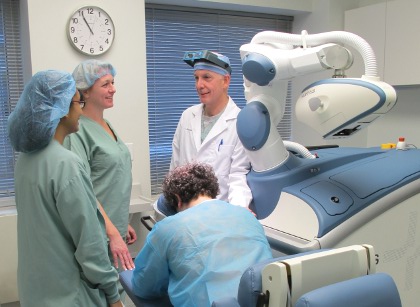
 Robert M. Bernstein, M.D., F.A.A.D., world-renowned pioneer of the Follicular Unit Transplantation (FUT) and Follicular Unit Extraction (FUE) hair transplant techniques and founder of Bernstein Medical – Center for Hair Restoration, will become the first hair transplant surgeon on the East Coast to use the robotic ARTAS System for Hair Restoration. Procedures using the computer-driven, automated system will begin in November 2011 in his state-of-the-art New York City facility.
This new system, developed by Restoration Robotics, Inc., is more than just a new tool for performing Follicular Unit Extraction. Rather, it is a complex system that uses the latest in mechanical and software technology to automate FUE surgery. The robot not only allows doctors perform this typically labor and skill intensive procedure, but it provides a variety of benefits to their patients. Among these benefits are increased accuracy in follicular unit graft harvesting, reduced harvesting time, and increased graft survival.
From the efficiency of the ARTAS System in extracting follicular unit grafts, to the quality of the grafts, to patient safety, the benefits are many for the physician. The patient will receive a high quality hair transplant with a less intensive time commitment, less anesthesia needed to numb the area, improved hair growth rates, and a better overall FUE hair transplant experience.
Restoration Robotics, Inc. — based in Mountain View, CA — has developed a robotic system for follicular unit extraction (FUE), called the ARTAS™ robotic system for hair restoration. The computerized device has received 510(k) approval from the Food and Drug Administration. Restoration Robotics is due to begin marketing the system for use in hair restoration clinics in the United States.
The FDA classifies the ARTAS robotic system for hair restoration as a “computer assisted hair harvesting system” and describes it as being used to identify and extract follicular units to aid the surgeon during hair transplant procedures.