Posts Tagged: Front of Scalp

Can You Have Hair Transplant to Crown Before Front or Top of Scalp?

October 26th, 2009

Q: Can the crown be transplanted first instead of frontal area? Why is the crown the last choice? Any reasons behind it?

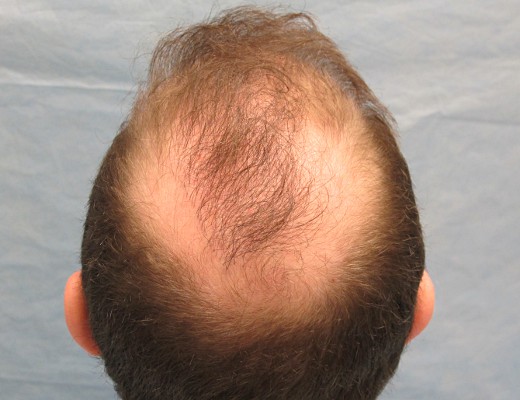
A: The crown can be transplanted first in patients who have very good donor reserves (i.e., high density and good scalp laxity). Otherwise, after a hair restoration procedure to the crown you may not be left with enough hair to complete the front and top if those areas were to bald.

Cosmetically, the front and top are much more important to restore than the back. A careful examination by a trained hair restoration surgeon can tell how much donor hair there is available for a hair transplant.

For more information on this topic, see my publication on surgical planning of hair transplants, “Follicular Transplantation: Patient Evaluation and Surgical Planning.”


Posted by Robert M. Bernstein M.D. at 12:51 pm

What Causes Hair Loss in Women and How do You Treat General Thinning?

February 3rd, 2009

Q: I’ve been losing my hair just around the front of my scalp for years, but now it’s bad enough that I need to wear a wig to hide the top and back. Do you transplant women?

A: If you have thinning in such a broad area, most likely your donor area is also thin and you would not be a good candidate for surgery.

An examination can determine this and also determine if there is some other cause of your hair loss other than genetics.


Posted by Robert M. Bernstein M.D. at 4:32 am

After Hair Transplant What are Effects of DHT on Donor Hair?

November 25th, 2008

Q: Hi! I wanted to ask if after a hair restoration surgery the transplanted hair will eventually fall out? Because the surgery is to restore hair mainly for people with genetic hair loss which results from DHT, won’t the DHT make the new follicles implanted fall out as well?

A: Hair loss is due to the action of DHT (a byproduct of testosterone) on hair follicles that cause them to shrink and eventually disappear (the process is called miniaturization). The follicles on the back and sides of the scalp are not sensitive to DHT and therefore don’t bald (miniaturize).

When you transplant hair from the back and sides to the bald area on the front or top of the scalp the hair follicles maintain their original characteristics (their resistance to DHT) and therefore they will continue to grow.


Posted by Robert M. Bernstein M.D. at 11:38 am

What Happened with Joe Biden’s “Pluggy” Hair Transplant and What Repair Strategy do You Suggest?

October 28th, 2008

Q: What’s the story with Joe Biden’s hair?

A: Joe Biden — former Senator from Delaware and now the Vice President of the United States — apparently had a hair transplant many years ago using the older hair restoration techniques. This included not only transplanting hair in large plugs (corn rows), but using them to create a broad frontal hairline; a design that generally does not look natural as a person ages.

Also, the older grafts were transplanted in a vertical orientation giving a sprout-like, unnatural appearance.

The use of large plugs and the inefficiencies of the older procedures waste a considerable amount of donor hair, leaving Senator Biden with a dense rim of hair in the front part of his scalp and little coverage behind that.

The repair strategy would consist of removing the larger plugs, microscopically dividing them into smaller grafts (individual follicular units of 1 to 3 hairs each), and then placing the smaller grafts in a more forward direction and in a more natural distribution. This involves using the 1-hair units to soften the frontal hair line and the 2- and 3-hair units to extend the transplant further back on the scalp.

In addition to the hair transplant repair, Biden received significant cosmetic improvement from the natural graying of his hair over the years, as this tends to make the hair appear fuller and any irregularities less noticeable.


Posted by Robert M. Bernstein M.D. at 10:46 am

Should Young Person Start with Hair Transplant at Crown?

August 21st, 2007

Q: I am 26 years old, have had two successful hair transplants, but am still losing hair in the crown area. The doctor I have worked with told me that he does not do crown work on anyone until they are at least 40 (due to lack of donor area). I have very thick hair and the transplanted area looks as if nothing was lost. Would you do work on someone my age in their crown area if they have enough donor hair?

A: Although I am hesitant to start with the crown when transplanting a younger person, if you have good coverage on the front and top of your scalp from the first two sessions then extending the hair transplant into your crown may be reasonable.

It depends upon your remaining donor supply and an assessment of how bald you will become. I would need to examine you.

If it is likely that you will progress only to a Norwood Class 6, then transplanting your crown can be considered. If you will progress to a Class 7 then you should not since, in the long term, hair that was placed in the crown might be better used for other purposes, such as connecting the transplanted top to receding sides.


Posted by Robert M. Bernstein M.D. at 8:31 am


Pages: 1 2 Next»


© 2009 Bernstein Medical, P.C. All Rights Reserved.