Dr. Bernstein was interviewed on the Howard Stern Show for a Howard 100 News Brief about hair transplantation.
George Takei — originally of Star Trek fame and currently an announcer for the show — had recently described his ‘pluggy’ transplant from 1980s in an interview on the show.
The American consumer’s best source for finding top medical specialists — Castle Connolly’s America’s Top Doctors — recently published its 8th Edition.
Dr. Bernstein is included for his work in hair restoration and hair transplants.
Q: I understand that seeing the result of a hair transplant is a process – what can I expect? — L.L., Highland Park, T.X.
A: It generally takes a year to see the full results of a hair transplant. Growth usually begins around 2 1/2 to 3 months and at 6-8 months the hair transplant starts to become comb-able.
Over the course of a year, the hair will gain in thickness and in length and may also change in character. During this time, hair will often become silkier, less kinky or take on a wave, depending upon the original characteristics of the patient’s hair.
In subsequent hair restoration procedures, growth can be slower.
Synopsis: This publication reviews the major advances in the science of hair loss that have occurred over the past decade. These include advances in the diagnosis of androgenetic alopecia, advances in our understanding of the mechanisms behind genetic hair loss, studies in the efficacy of medical treatment of hereditary baldness, the development and FDA-approval of the lasercomb device for hair restoration, and the development of a screening test for hair loss.
Q: If you transplant grafts in between the thinned out areas, is there a risk of cutting previously normal roots, even if one is cautious? — J.S., Upper Saddle River, N.J.
A: Healthy hair can be temporarily shocked from a hair transplant and then shed (the process is called telogen effluvium) but it will not be permanently damaged.
Any healthy hair that is lost in this shedding process should re-grow.
O, The Oprah Magazine has a feature on hair loss in women in their March 2010 issue. Dr. Bernstein was consulted for the article and discussed female hair transplantation.
“Since female hair loss is often diffuse, only about 20 percent of female patients with thinning hair are candidates, says Robert Bernstein, MD, a New York City dermatologist who specializes in these surgeries.”
Asylum.com reporter Brett Smiley interviewed Dr. Bernstein to get his take on hair loss and the balding pattern known as a “power alley”:
“Power alley is an accurate term for that type of balding,” says Dr. Robert M. Bernstein, a clinical professor of dermatology at Columbia University and world-renowned hair-transplant surgeon. “It’s Norwood Class III balding, which is the most common type.”
Q: I have been using Rogaine and Propecia, but recently purchased a bottle of Nioxin Cleanser/Shampoo. However, I am reluctant to apply it because I have noticed that the Nioxin website recommends against mixing Nioxin products with Rogaine products. Do you think that it is safe or advisable to use the Nixon shampoo? Is there any indication that this product is even effective? Any advice?
A: Nioxin has no active ingredients that can grow hair. There is an increased incidence of scalp irritation when used with Rogaine – i.e., the likely reason for their warning. I would stick with the medications that are proven to work, i.e. finasteride and minoxidil.
Dr. Robert M. Bernstein was interviewed for a segment on The Today Show on the subject of eyelash enhancement and use of the eyelash medication Latisse. Dr. Bernstein first appears about two minutes into the clip. View the complete video.



 Dr. Bernstein was interviewed on the Howard Stern Show for a Howard 100 News Brief about hair transplantation.
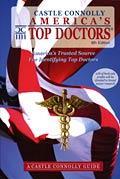 The American consumer’s best source for finding top medical specialists — Castle Connolly’s America’s Top Doctors — recently published its 8th Edition.

 O, The Oprah Magazine has a feature on hair loss in women in their March 2010 issue. Dr. Bernstein was consulted for the article and discussed female hair transplantation.
 Asylum.com reporter Brett Smiley interviewed Dr. Bernstein to get his take on hair loss and the balding pattern known as a “power alley”:
 Dr. Robert M. Bernstein was interviewed for a segment on The Today Show on the subject of eyelash enhancement and use of the eyelash medication Latisse. Dr. Bernstein first appears about two minutes into the clip.