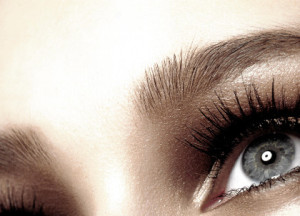
 Gone are the days when women plucked their eyebrows to a tiny strip of hair. Thicker, more full eyebrows are “in,” reports New You magazine in “A Vision of Youthful Loveliness.” Women with eyebrows that are severely thin — from over plucking, aging, trauma, or dermatological conditions — have turned to physicians for help, and Dr. Bernstein, for one, has an answer: eyebrow transplantation.
In the Spring 2016 issue of the magazine, Dr. Bernstein discusses surgical eyebrow restoration, a procedure that has grown in popularity in recent years. Whether the increased demand for eyebrow transplant procedures has been a response to fashion and style trends or increased awareness that the procedure exists, the fact is that more women than ever are inquiring about the procedure at hair restoration clinics like Bernstein Medical – Center for Hair Restoration.
In the article, Dr. Bernstein describes the procedure:
“We take hair from behind the ear or closer to the middle of the scalp if someone’s brows are coarser,” he explains of the process, which takes about five hours, and grows in gradually and then permanently after a year.
Then he touches on the appearance of the eyebrow after the procedure:
First [the transplanted hairs] have to be trimmed, but eventually they mimic the growth pattern of the eyebrows.
 The Eyebrow Transplant section of our website contains some important tips for how to aesthetically optimize the results of the procedure:
- Use single-hairs in the transplant, not grafts of multiple hairs
- Hairs should be rotated to follow the natural curve of the brow
- The transplanted hair must be planted to lie as flat to the skin surface as possible
- The transplanted grafts should account for changes in the natural direction of the hair in different parts of the eyebrow, with the upper hairs of the eyebrow pointing out and slightly downward and the lower ones pointing out and slightly upward, creating an interlocking ridge that gives eyebrows their fullness
Visit the Eyebrow Transplant page for more detail on the technique behind the procedure, the typical cosmetic result of the procedure, the anatomy of an eyebrow, and more.
View before after photos of some of our eyebrow transplant patients.
Images c/o New You Magazine
Posted by

 Eyebrow transplant procedures are growing in popularity. More women are realizing how much damage they can cause to their appearance by overplucking, shaping, and over-styling their eyebrows. Today, the New York Times reports on the trend of repairing eyebrows with hair transplant techniques and the use of camouflage products to cover up eyebrows that have been “tamed into oblivion.”